

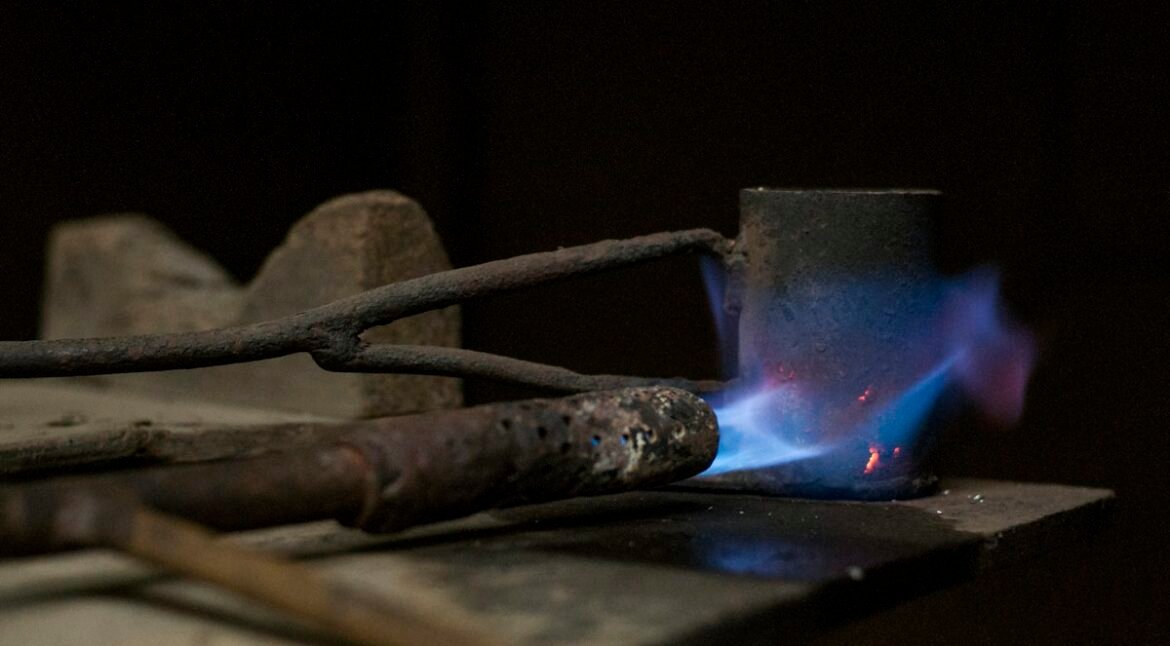
A medical gas pipeline is only as clean as its dirtiest joint. Copper tube and fittings arrive from the factory cleaned and capped, but the moment an installer heats a joint, the inside of the tube is at risk. That is why medical gas installation standards require copper joints to be brazed while the inside of the pipe is purged with nitrogen. This guide explains why purging matters and the good practices that go with it.
What happens inside a pipe during brazing
Brazing heats copper to a high temperature so that a filler metal melts and flows into the joint. At these temperatures, copper reacts quickly with the oxygen in air. If the inside of the tube contains air, a black oxide scale forms on the inner surface around every joint. Later, when gas flows through the system, flakes of this scale can break loose. They can contaminate the gas, block or damage valves, regulators and flowmeters, and in the worst case reach equipment connected to patients.
How nitrogen purging prevents it
Purging replaces the air inside the pipe with an inert gas, normally oxygen-free nitrogen, during brazing. With no oxygen present at the hot surface, oxide cannot form. The joint stays bright and clean on the inside, and the pipeline remains free of loose particles.
Good practice for purging
- Use the right gas. Use oxygen-free nitrogen of suitable purity from a regulated supply, never compressed air or oxygen.
- Control the flow. Use a regulator and flowmeter to provide a gentle, steady flow. Too much flow can disturb the molten filler; too little allows air back in.
- Purge before heating. Let nitrogen flow long enough to displace the air from the section being worked on before applying heat.
- Keep purging while brazing and until the joint has cooled enough that oxidation will not occur.
- Provide an outlet. The purge gas must be able to escape at the far end, otherwise pressure can build and blow out the molten filler.
- Ventilate the work area. Nitrogen displaces oxygen, so confined spaces must be well ventilated to protect installers.
Choosing filler metals
Copper-to-copper joints in medical gas systems are commonly made with copper-phosphorus or silver-bearing brazing alloys, as specified by the relevant installation standard. Copper-phosphorus alloys are self-fluxing on copper, which avoids flux residue inside the pipe. Where flux is needed, for example when joining copper to brass components, it should be applied sparingly to the outside of the joint only, and residues removed afterwards. Always follow the filler and procedure required by the project’s standard, such as HTM 02-01, ISO 7396-1 or NFPA 99.
Other habits that keep pipelines clean
- Keep tube and fitting ends capped until the moment of assembly.
- Cut tube with a proper tube cutter and deburr carefully, removing all swarf.
- Never use oil-based lubricants or cutting fluids on medical gas pipework.
- Store materials off the floor in a clean, dry area.
- Use only medical grade tube and fittings cleaned for oxygen service.
Training and supervision
Brazing for medical gas should be carried out by installers trained and assessed for this work, under the supervision of the project’s competent person. Sample joints can be sectioned to check penetration and internal cleanliness before work begins.
Testing after installation
Once installation is complete, the system is pressure tested and checked for leaks, then purged with the working gas, and tested for particulate contamination, gas identity and quality before it is approved for use. Good brazing and purging make it far more likely that the system passes these tests first time, saving time and cost on commissioning.
Quality starts with the materials
Even perfect brazing cannot make dirty tube clean. Start with certified medical grade copper tubes and copper fittings from a reliable supplier. Nefton Exports Industries supplies both with test certificates. Contact us for a quotation.