
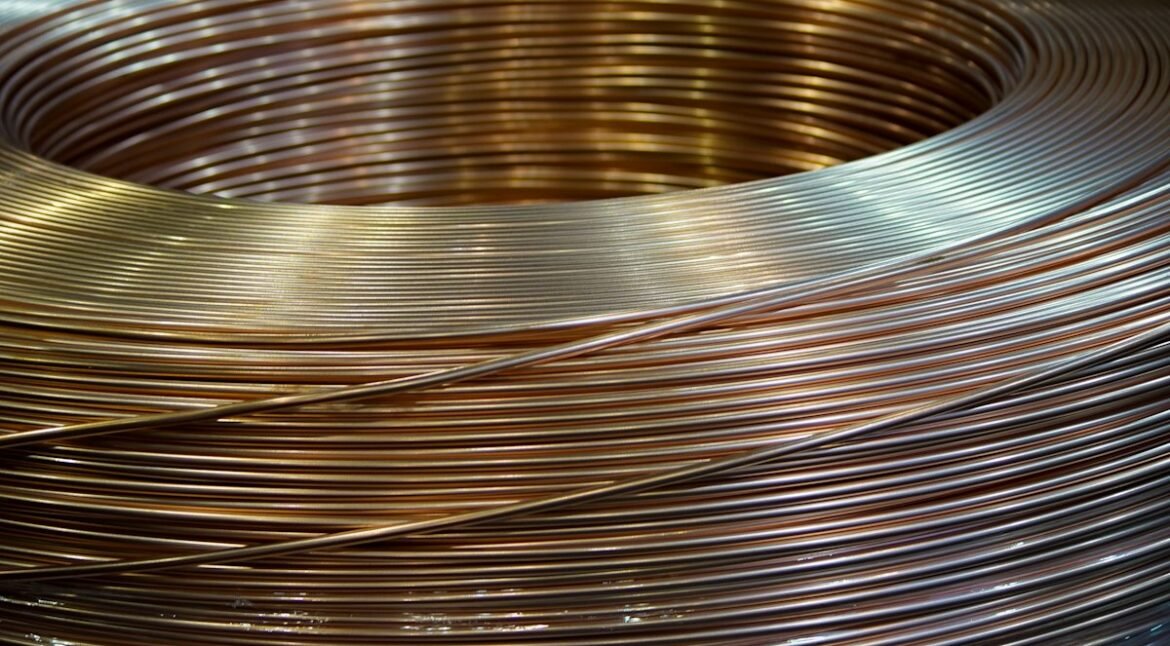
If you look at the certificate for almost any copper tube used in plumbing, refrigeration or medical gas systems, you will see the same grade: Cu-DHP. It also appears under other names, such as C12200 in American standards and CW024A in European standards. This grade is so common that many buyers never ask what it means. This guide explains what phosphorus-deoxidised copper is and why it is the right choice for tubes and fittings.
The basics
Cu-DHP stands for copper, deoxidised, high residual phosphorus. It is a very pure copper, typically at least 99.9 percent copper including silver, with a small, controlled amount of phosphorus, usually in the range of about 0.015 to 0.040 percent. That small addition makes a big difference to how the copper behaves when it is heated and joined.
Why deoxidise copper?
Molten copper absorbs oxygen. In some copper grades, that oxygen remains in the solid metal as tiny particles of copper oxide. This is acceptable, and even useful, in electrical copper. But it causes a problem when the copper is heated in the presence of hydrogen, for example in a brazing flame or during annealing in certain atmospheres. Hydrogen reacts with the oxide inside the metal to form steam, which cannot escape. The pressure creates tiny cracks along the grain boundaries, a failure known as hydrogen embrittlement.
Adding phosphorus during melting removes the oxygen by combining with it. The result is oxygen-free copper that can be brazed, welded and annealed without the risk of hydrogen embrittlement. For tubes and fittings, which are almost always joined by heat, this is essential.
Cu-DHP vs ETP copper
Electrolytic tough pitch copper, known as ETP copper, Cu-ETP or C11000, is another very common grade. It has excellent electrical conductivity and is the standard material for electrical cables, busbars and many electrical components.
- Conductivity: ETP copper has higher electrical conductivity. The phosphorus in Cu-DHP reduces conductivity noticeably, which is why Cu-DHP is not used where electrical performance is the priority.
- Joining: Cu-DHP is far better for brazing and welding, because it is not susceptible to hydrogen embrittlement.
- Typical products: ETP for electrical products; Cu-DHP for tubes, fittings, heat exchangers and many formed parts.
Where Cu-DHP is used
- Medical gas copper tubes to EN 13348 and ASTM B819.
- Water and heating tubes to EN 1057 and ASTM B88.
- Air conditioning and refrigeration tubes.
- Copper fittings such as elbows, tees, couplings and reducers.
- Fin tubes and heat exchanger tubes.
- Roofing, cladding and many deep-drawn or formed parts.
Other properties
Cu-DHP has good corrosion resistance in water and normal atmospheres, excellent formability and good thermal conductivity, making it ideal for heat transfer. It can be supplied in different tempers, from soft annealed for bending and coils to hard drawn for straight lengths.
Other copper grades you may meet
Besides Cu-DHP and ETP copper, buyers sometimes see oxygen-free high conductivity copper, known as Cu-OF or C10200, which combines very low oxygen with high conductivity and is used in demanding electrical and vacuum applications. There are also low-phosphorus deoxidised grades, such as Cu-DLP, which offer a compromise between brazeability and conductivity. For plumbing, medical gas and refrigeration tube, however, Cu-DHP remains the standard choice, and most tube and fitting standards specify it directly.
Is all Cu-DHP the same?
The grade sets the chemistry, but quality also depends on the tube maker’s process control: dimensional accuracy, surface finish, internal cleanliness and consistent temper. That is why buyers should look at the full certificate and the supplier’s quality system, not just the grade name.
What to check on a certificate
- The grade designation: Cu-DHP, CW024A or C12200.
- Copper content and phosphorus content within the standard’s limits.
- Temper and mechanical properties.
- Dimensions and, for medical gas tube, cleanliness results.
Sourcing Cu-DHP products
Nefton Exports Industries manufactures copper tubes and fittings from high-purity copper, supplied with Materials Test Certificates. Contact us with your requirement.