

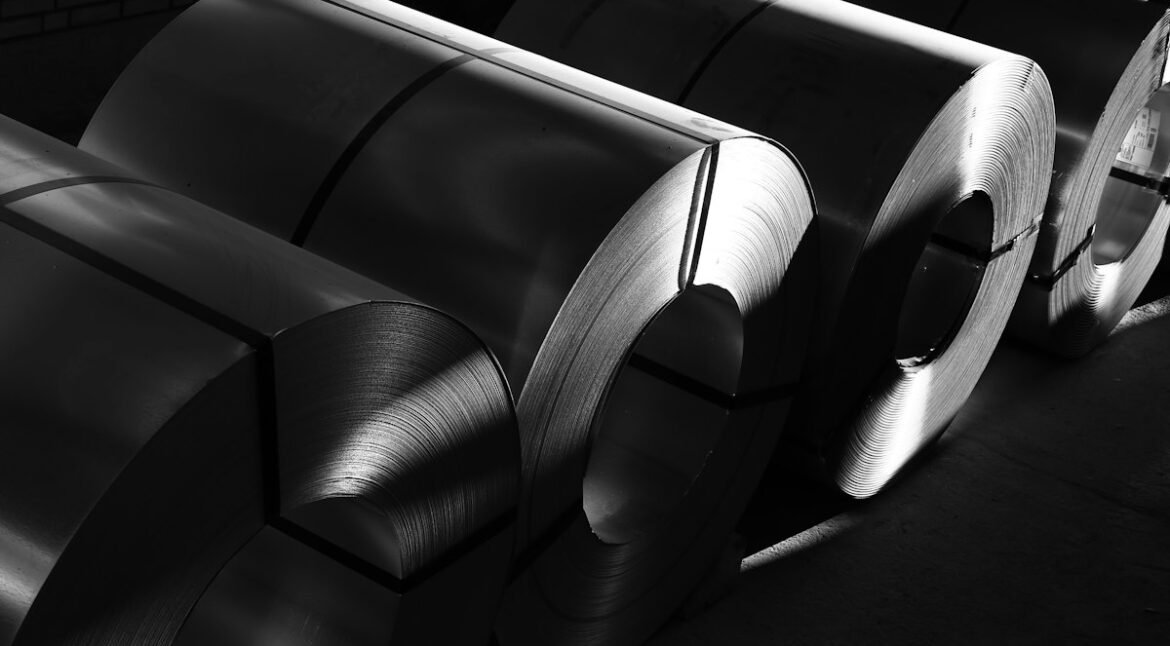
Stainless steel coil is the starting point for a huge range of products, from kitchen equipment and appliance panels to tanks, tubes and architectural cladding. Buying coil rather than cut sheet can reduce cost and waste, especially for manufacturers who process material on their own lines. But a coil order involves more decisions than a sheet order. This guide explains the main grades, finishes and processing options, and what to include when you order.
Common grades
- 304 / 304L: the general-purpose austenitic grade for food equipment, appliances, architectural and general industrial use.
- 316 / 316L: contains molybdenum for better resistance to chlorides; used in marine, chemical and pharmaceutical applications.
- 430: a ferritic grade with lower cost and good corrosion resistance in mild environments, common in appliances and decorative trim.
- 201 and other 200-series grades: lower nickel austenitic grades used in some cost-sensitive applications, with lower corrosion resistance than 304.
- 409 and 410: used for automotive exhaust and some structural or heat-resisting parts.
- Duplex grades: for high strength and chloride resistance.
Hot rolled and cold rolled
Hot rolled coil is produced at high temperature and is generally thicker, with a duller surface known as a No. 1 finish after annealing and pickling. It is used where appearance is less important, such as industrial tanks and structural parts.
Cold rolled coil is rolled further at room temperature to reduce thickness, improve flatness and tolerances, and give a smoother surface. Common cold rolled finishes include:
- 2B: a smooth, moderately reflective mill finish, the most widely used.
- BA (bright annealed): a highly reflective, mirror-like surface.
- No. 4 / brushed: a directional satin finish produced by polishing, popular for appliances and architecture.
Processing options
Slitting
Slitting cuts a wide master coil into narrower coils, called slit coils or strips, to suit the buyer’s production line. The width tolerance and edge condition (slit edge or mill edge) should be specified.
Cut to length
Coil can be levelled and cut into flat sheets of a chosen length. This is useful when you need non-standard sheet sizes or want to reduce offcut waste.
Surface protection
A peelable plastic film can be applied to protect polished or bright surfaces during fabrication and transport. Interleaving paper is another option.
What to include in an order
- Grade and standard, for example ASTM A240 or EN 10088.
- Hot rolled or cold rolled, and surface finish.
- Thickness and tolerance.
- Width, and slit width and tolerance if slitting is required.
- Coil inner diameter to suit your decoiler, and maximum coil weight.
- Edge condition and any surface protection.
- Packing: eye-to-sky or eye-to-wall, wrapping, steel bands and wooden skids.
- Certification, such as an EN 10204 3.1 inspection certificate.
Coil or sheet: which is better value?
Coil usually costs less per tonne than cut sheet, because it needs less processing at the mill. It suits manufacturers with their own decoiling, levelling or roll-forming equipment, and those running long production batches. Buyers who need small quantities, several thicknesses or occasional sizes are often better served by cut sheet or cut-to-length service from the supplier, which avoids storing heavy coils and handling offcuts. Ask your supplier to quote both ways if you are unsure; the difference in yield and labour can outweigh the difference in material price.
Handling tips
Coils are heavy and can unwind with force if bands are cut carelessly. Use proper lifting equipment such as C-hooks or coil tongs, store coils on cradles or chocks so they cannot roll, and keep stainless coils away from carbon steel dust and tools, which can cause rust spots.
Sourcing coils
Nefton Exports Industries supplies stainless steel coils, sheets and other steel products with Materials Test Certificates. Send us your specification for a quotation.