

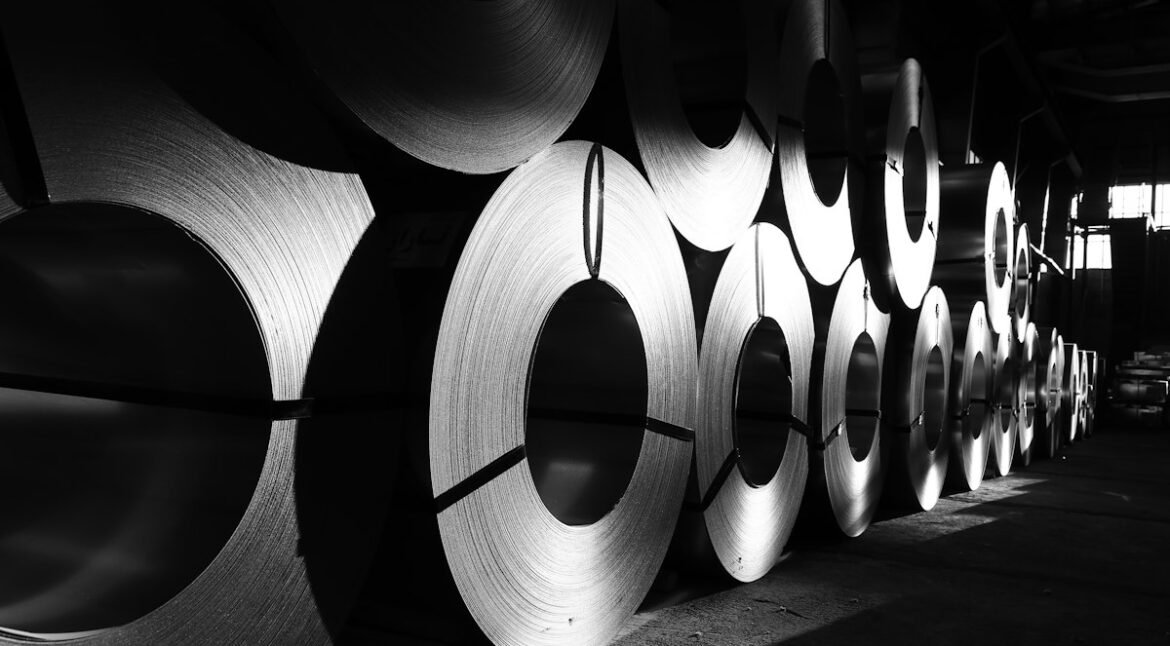
Grade 304 and grade 316 are the two most widely used stainless steels in the world. They look almost identical, they are both easy to fabricate, and they are both available as sheet, coil, plate, pipe, bar and fittings. Yet choosing the wrong one can mean early corrosion or unnecessary cost. This guide explains the real differences and how to decide which grade your project needs.
What they have in common
Both 304 and 316 are austenitic stainless steels. That means they contain enough chromium and nickel to give a stable, non-magnetic structure in the annealed condition, good toughness even at low temperatures, and excellent formability and weldability. Both form a thin, invisible chromium oxide layer on the surface that protects the steel from corrosion and repairs itself if scratched.
The key difference: molybdenum
The main difference between the two grades is that 316 contains molybdenum, typically around 2 to 3 percent, while 304 does not. Grade 316 also usually has slightly more nickel. Molybdenum greatly improves resistance to pitting and crevice corrosion, especially in environments containing chlorides such as seawater, de-icing salts and many chemicals.
In simple terms, 304 performs very well in most indoor and mildly corrosive environments, while 316 is the better choice where salt, chlorides or aggressive chemicals are present.
Comparing performance
Corrosion resistance
Grade 316 offers clearly better resistance to pitting in chloride environments. In coastal locations, chemical plants, swimming pool environments and marine equipment, 304 may show rust spots and pitting over time, while 316 is far more durable.
Strength and fabrication
Mechanical properties of the two grades are broadly similar. Both can be cut, bent, rolled, deep drawn and welded with standard methods. Low-carbon versions, designated 304L and 316L, are used for heavier welded sections because they reduce the risk of corrosion along weld zones.
Cost
Grade 316 is more expensive than 304 because of its molybdenum and higher nickel content. The price gap varies with nickel and molybdenum markets, but 316 typically costs noticeably more for the same product.
Typical uses
Grade 304 is used for:
- Kitchen equipment, sinks and food processing surfaces.
- Architectural panels, handrails and trim indoors or in mild climates.
- General industrial tanks, ducting and piping for non-aggressive media.
- Domestic appliances and enclosures.
Grade 316 is used for:
- Marine fittings, coastal structures and equipment exposed to sea spray.
- Chemical and petrochemical process equipment.
- Pharmaceutical and medical equipment where cleanability and corrosion resistance are critical.
- Pulp and paper, textile and water treatment plants handling chlorides.
How to decide
- Look at the environment. Indoor, dry and non-chemical: 304 is usually enough. Coastal, salty or chemical: choose 316.
- Consider maintenance access. If a part will be hard or costly to replace, the extra durability of 316 can justify its price.
- Think about welding. For heavily welded fabrications, specify the L grades.
- Check the specification. Project documents and industry standards often state the required grade.
- Ask for certification. A mill test certificate confirms the actual chemical composition, so you can be sure 316 really contains its molybdenum.
A common mistake
Because the two grades look the same, mix-ups happen in storage and fabrication. Keep grades clearly marked and segregated, and check certificates on delivery. Where it matters, a simple alloy check can verify the grade before fabrication begins.
What about other grades?
For conditions beyond what 316 can handle, such as hot, concentrated chlorides or sour service, engineers look to higher alloys like duplex and super duplex stainless steels or nickel alloys. These cost more again, so they are reserved for duties where 316 would not last. For most projects, the choice really is between 304 and 316.
Sourcing stainless steel
Nefton Exports Industries supplies stainless steel sheets, coils, pipes and other steel products in 304, 316 and other grades, with Materials Test Certificates. Send us your grade, size and quantity for a quotation.