

Steel plate is the backbone of heavy fabrication. Tanks, pressure vessels, bridges, machinery frames, ships, hoppers and countless other structures start life as flat plate. But “steel plate” covers a wide family of grades, each designed for a different combination of strength, toughness, weldability, wear resistance and corrosion resistance. Choosing the wrong grade can mean failed inspections, early wear or unnecessary cost. This guide groups the main types and explains when to use each.
1. Structural steel plate
Structural grades are the most widely used plates. They offer good strength, toughness and weldability at an economical price, and they are used for buildings, bridges, machinery bases, frames and general fabrication.
Common examples include ASTM A36 and A572 in American practice, S275 and S355 under the European standard EN 10025, and IS 2062 grades such as E250 and E350 in India. Higher-strength grades like S355 allow lighter sections for the same load.
2. Pressure vessel plate
Boilers, pressure vessels and storage tanks need plate with guaranteed properties at their design temperatures and pressures, and with documented toughness. Pressure vessel grades include ASTM A516 Grade 60 and 70 for moderate and lower temperature service, ASTM A515 for higher temperatures, and EN 10028 grades such as P265GH and P355GH. Alloy grades containing chromium and molybdenum are used where strength at high temperature and resistance to hydrogen attack are needed.
3. High tensile plate
High tensile and quenched and tempered plates provide much higher yield strength than structural grades. They let designers reduce weight in cranes, mining equipment, trailers and heavy lifting structures. Welding these grades requires controlled procedures, including preheat and heat input limits, to preserve their properties.
4. Wear and abrasion resistant plate
Abrasion resistant plates are hardened to resist wear from sliding and impact by materials such as rock, sand, coal and ore. They are used for chutes, hopper liners, dump truck bodies, bucket parts and crusher components. They are usually specified by nominal hardness, such as 400 or 500 Brinell. Higher hardness gives longer wear life but makes cutting, bending and welding more demanding.
5. Shipbuilding plate
Shipbuilding plates are made to classification society rules and come in normal and higher strength grades with specified impact toughness at different temperatures. They are certified by the classification society for use in hulls and marine structures.
6. Stainless and duplex plate
Where corrosion resistance or hygiene matters, stainless steel plate in grades such as 304L and 316L is used for chemical tanks, food processing equipment and marine parts. Duplex grades add higher strength and better chloride resistance. Nickel alloy plate is reserved for the most aggressive or high-temperature conditions.
What to put in your order
- Standard and grade, with any supplementary requirements such as impact testing.
- Thickness, width and length, or cut-to-size dimensions with drawings.
- Condition: as-rolled, normalised, or quenched and tempered.
- Surface requirements, such as shot blasted and primed.
- Testing: ultrasonic testing for laminations, impact tests, hardness tests.
- Certification: usually an EN 10204 3.1 certificate, or 3.2 where specified.
- Marking and packing for transport.
Cutting and fabrication tips
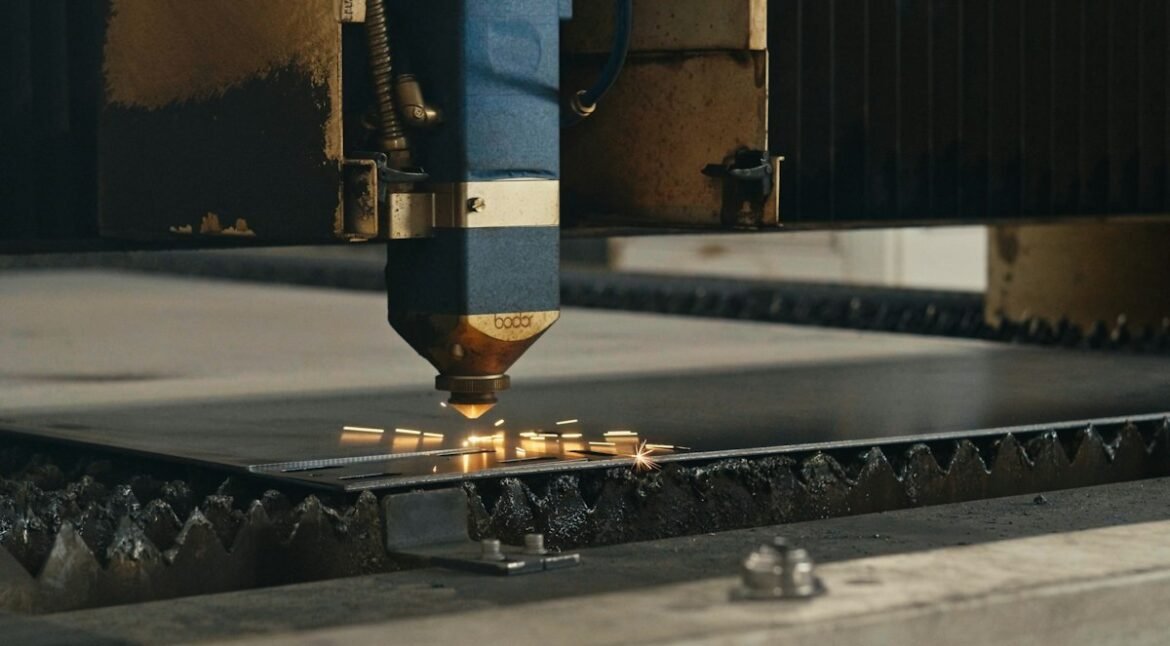
Plate can be cut by flame, plasma, laser or waterjet. Thicker and higher-strength grades may need preheating before flame cutting and welding to avoid cracking. Always follow the welding procedure approved for the specific grade and thickness, and keep plate certificates linked to cut parts so traceability is maintained through fabrication.
A quick decision guide
Start with the duty. If the plate carries ordinary structural loads, a structural grade is usually right. If it contains pressure, choose a pressure vessel grade. If weight matters, consider high tensile plate. If it faces abrasion, choose wear resistant plate, and if it faces corrosion or hygiene demands, choose stainless or duplex.
Sourcing plate
Nefton Exports Industries supplies industrial steel plates, forged plates and stainless sheets with Materials Test Certificates. Send us your grade and sizes for a quotation.