

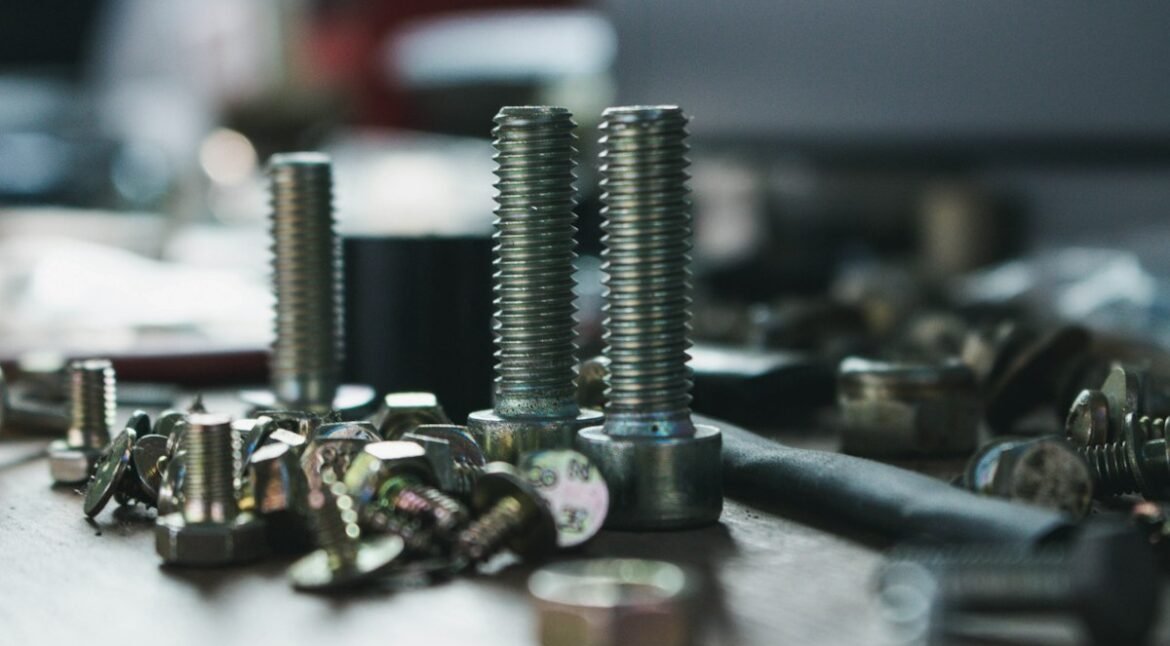
Brass is one of the most useful engineering materials around. It machines beautifully, resists corrosion, conducts electricity well and has an attractive finish. That is why it is used for everything from plumbing fittings and electrical components to anchors, washers, clamps and nuts. This guide covers the main brass and bronze products used in construction and industry, explains what DIN 934 means for hex nuts, and sets out what to include when ordering.
What is brass?
Brass is an alloy of copper and zinc. Changing the proportions and adding small amounts of other elements produces grades with different properties. Free-machining brasses contain a small amount of lead to make high-speed machining easier, which is why they are popular for turned parts such as nuts and fittings. For drinking water applications, many countries now require low-lead or lead-free brass grades, so it is important to specify the right grade for the end use.
Bronze, by contrast, is a copper alloy where the main addition is usually tin, sometimes with phosphorus, aluminium or other elements. Bronzes are often chosen for higher strength, wear resistance and resistance to seawater.
Why choose brass components?
- Corrosion resistance in water, humid air and many mild chemical environments.
- Excellent machinability, allowing precise threads and complex shapes at low cost.
- Electrical conductivity, useful for earthing and electrical connections.
- Non-sparking properties, valuable in some hazardous areas.
- Attractive appearance for visible fittings and hardware.
- Recyclability, with high scrap value.
Common brass and bronze products
- Bronze fittings for water, marine and industrial pipework.
- Brass anchors for fixing into masonry and concrete.
- Brass pipe brackets and pipe clamps for supporting copper and other pipework.
- Brass washers for spreading load and sealing joints.
- Brass neutral links used in electrical distribution boards.
- Brass hex nuts, including nuts made to DIN 934.
What is DIN 934?
DIN 934 is a long-established German standard for hexagon nuts with a metric coarse thread. It defines dimensions such as the thread size, the width across flats and the height of the nut for each size, from small nuts such as M3 up to large sizes. Because it has been used for so long and so widely, DIN 934 remains a common reference in specifications and purchase orders, even though it has largely been replaced by ISO standards such as ISO 4032. Some dimensions, especially across-flats sizes, differ slightly between the DIN and ISO versions in certain sizes, so it is worth stating which one you need.
DIN 934 nuts are made in steel, stainless steel and non-ferrous materials including brass. Brass hex nuts to DIN 934 are popular in electrical, marine and decorative applications, and wherever a corrosion-resistant, non-magnetic or conductive nut is needed.
Ordering checklist
- Product type and standard, for example hex nut to DIN 934 or ISO 4032.
- Size and thread, such as M8 coarse thread.
- Material grade, including any lead-free or low-lead requirement.
- Finish, such as natural, nickel plated or tin plated.
- Quantity and packing, for example per box or per kilogram.
- Drawings for any custom fittings, brackets or clamps.
- Certification, such as a material test certificate for the batch.
Installation tips
Brass is softer than steel, so do not over-tighten brass nuts and fittings, and use the correct spanner size to avoid rounding the corners. Avoid direct contact between brass and aluminium in wet environments, as galvanic corrosion can occur. In potable water systems, confirm that the brass grade meets local regulations.
Sourcing brass components
Alongside copper and steel products, Nefton Exports Industries supplies bronze fittings, brass anchors, brass pipe brackets, brass washers, brass pipe clamps, brass neutral links and brass hex nuts to DIN 934. Browse our bars, rods and wires or send us your list of items for a quotation.