

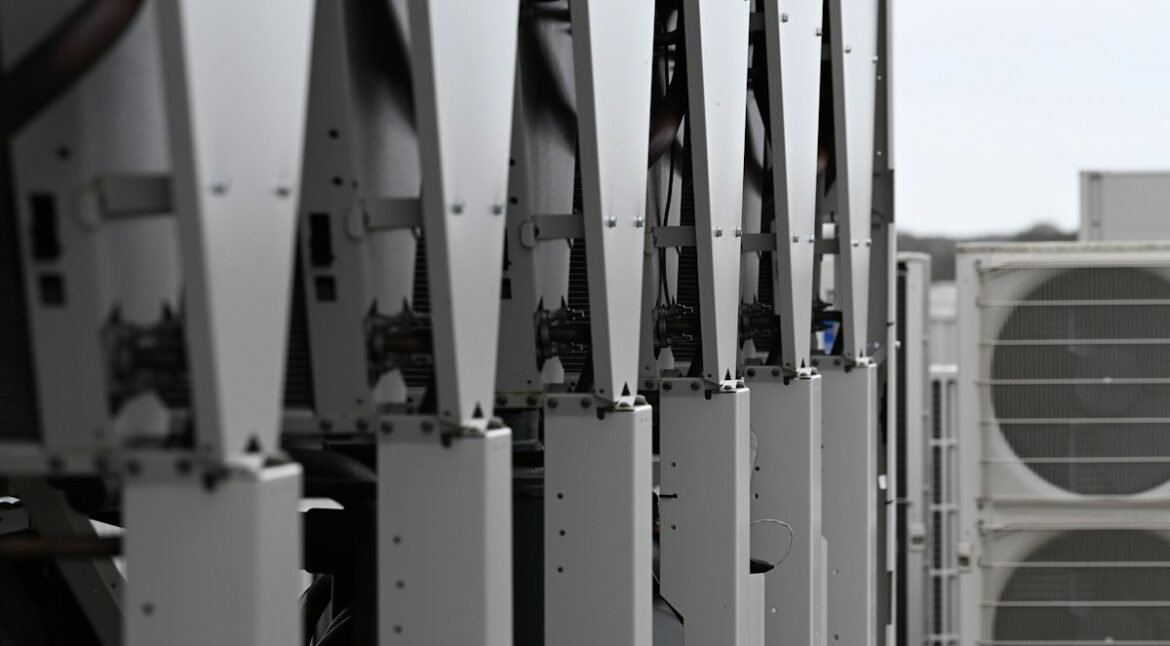
In heating, cooling and refrigeration equipment, the job is almost always the same: move heat from one fluid to another as efficiently as possible. Plain copper tube is already an excellent conductor of heat, but adding fins to its surface multiplies the area available for heat transfer. That is why copper fin tubes are found in condensers, evaporators, air coolers, heat recovery units and solar thermal systems. This guide explains how fin tubes work and what to consider when specifying them.
Why add fins?
Heat transfer between a tube and the fluid around it depends heavily on surface area. On the inside of a tube carrying refrigerant or water, heat transfer is usually efficient. On the outside, where the tube meets air or another gas, it is much weaker. Fins extend the outer surface so that far more air touches metal, which raises heat transfer without needing a longer or larger tube. The result is a more compact, more efficient heat exchanger.
Why copper?
- High thermal conductivity: copper conducts heat better than almost any other practical engineering metal, so heat moves quickly from the tube wall into the fins.
- Corrosion resistance in water, many refrigerants and normal atmospheres.
- Easy to form and join, so tubes can be bent into coils and brazed into headers.
- Recyclability, with high scrap value at end of life.
Main types of fin tube
Low fin tubes
Low fin tubes have short, closely spaced fins formed integrally from the tube wall itself by rolling. Because the fins are part of the tube, there is no contact resistance between tube and fin. Low fin tubes are widely used in shell-and-tube heat exchangers, condensers and chillers, and they fit standard tube sheets because their outer diameter is close to that of plain tube.
High fin or extruded fin tubes
Taller fins provide even more surface area for air-cooled applications. They can be extruded from a sleeve on the tube or formed in other ways, depending on the design.
Wound and embedded fins
Fins can also be made from strip wound helically around the tube, either tension-wound on the surface or embedded into a groove. These are common in air coolers and process heaters.
Plate fin coils
In many HVAC and refrigeration coils, copper tubes are expanded into stacks of thin plate fins, often aluminium. Here the fin is a separate plate rather than part of the tube.
Where copper fin tubes are used
- Refrigeration condensers and evaporators.
- Air conditioning and heat pump coils.
- Shell-and-tube heat exchangers and chillers.
- Oil coolers and process heat exchangers.
- Solar thermal collectors and heating systems.
- Heat recovery units in industrial plants.
What to specify when ordering
- Tube material and grade, for example phosphorus-deoxidised copper or a copper alloy where needed for corrosion resistance.
- Plain tube outside diameter and wall thickness.
- Fin type, height, thickness and fins per inch or per metre.
- Finned length and plain end lengths for fitting into tube sheets or headers.
- Straight lengths or U-bends, and bend radius if required.
- Testing, such as pressure or eddy current testing, and certification.
- Quantity and packing, since fins are easily damaged in transit.
Handling and installation tips
Fins are delicate. Store fin tubes in their packing until needed, lift them evenly to avoid bending, and protect the fins during installation. Damaged or flattened fins reduce heat transfer and can trap dirt. Keep tubes clean and capped before brazing to avoid contamination inside the circuit.
Sourcing copper fin tubes
Nefton Exports Industries manufactures copper fin tubes for heat exchangers, HVAC, refrigeration and solar thermal applications. Send us your drawing or specification for a quotation.